

1. Lock Cylinder Grade: The First Line of Physical Protection
As the core physical security component of a smart lock, the lock cylinder serves as the primary defense against violent damage and technical unlocking, and its grade directly determines the basic security performance of the smart lock. According to national security standards, civilian lock cylinders are divided into three grades: Grade A, Grade B and Grade C, with security performance upgraded sequentially. Grade A and Grade B lock cylinders have a short anti-technical unlocking time, which can be quickly cracked by tin foil and universal unlocking tools, failing to meet the security needs of modern families.
Grade C lock cylinder represents the highest civilian security level at present, with an anti-technical unlocking time of more than 10 minutes and excellent resistance to prying, drilling and violent damage. All our smart locks adopt high-standard Grade C straight-insert lock cylinder structures. Different from ordinary rear-mounted lock cylinders, this structure runs through the entire lock body. Even if the external panel is violently damaged or disassembled, the internal lock cylinder remains locked and intact. It completely avoids the security loophole of lock failure caused by panel damage and eliminates physical cracking risks from the source.
2. Fingerprint Recognition: Block Fake Fingerprints Effectively
Fingerprint unlocking is the most commonly used unlocking method for smart locks, and the quality of fingerprint recognition technology determines whether there are loopholes for fake fingerprint cracking. Traditional optical fingerprint recognition technology has low imaging accuracy and shallow recognition depth, only collecting surface fingerprint lines. It cannot distinguish real fingerprints from counterfeits and is easily cracked by silicone fingerprint films, fake molds and high-definition photos, resulting in prominent security risks, so it has been gradually phased out by the industry.
Semiconductor capacitive fingerprint recognition is currently the mainstream and secure solution in the industry. This technology deeply captures the fingerprint lines and biological capacitance signals of the dermis, only identifying living real fingerprints. It can accurately intercept various counterfeit fingerprints such as silicone films and fake finger molds, completely preventing fake fingerprint cracking. In addition, high-end models are equipped with AI intelligent learning algorithms, which can adapt to fingerprint wear, peeling and dry or wet finger conditions, continuously optimize recognition accuracy, and become more sensitive with use, balancing top-tier security and excellent user experience.
3. Anti-pry and Alarm System: Active Early Warning for All-weather Home Security
Different from traditional mechanical locks that only provide passive protection, high-quality smart locks support active security early warning and achieve all-round protection through high-precision sensor monitoring. The lock is built with intelligent sensors to real-time detect abnormal behaviors such as violent prying, forced disassembly, abnormal door opening and unclosed door status.
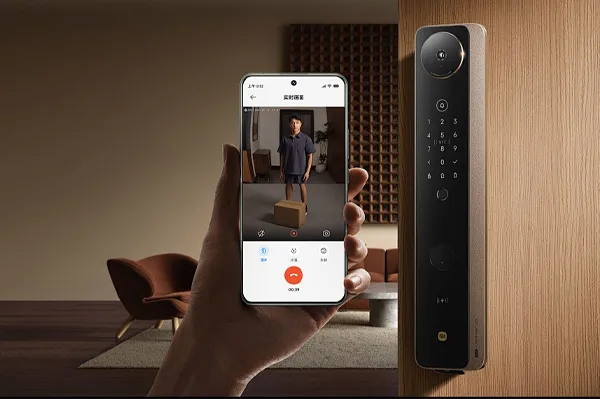
Once abnormal conditions are detected, the lock will immediately activate the security mechanism and emit a loud alarm sound of over 85 decibels to deter illegal intruders. Meanwhile, it will link to the mobile terminal through a Wi-Fi gateway and push alarm messages in real time, allowing users to remotely grasp the home security status. Some high-end models can link with outdoor smart cameras to automatically capture door footage and retain evidence when alarms are triggered, building a complete security system of monitoring, early warning and recording.
4. Communication Encryption and Anti-electromagnetic Interference: Prevent Electromagnetic Cracking and Data Leakage
Electromagnetic cracking through so-called “black boxes” is one of the most common security loopholes of low-quality smart locks. Unqualified products lack electromagnetic protection design and are vulnerable to strong electromagnetic interference from Tesla coils, causing short circuits and illegal unlocking without passwords. All our smart locks have passed strict anti-strong electromagnetic interference tests, with isolated internal circuit protection design, which can effectively resist black-box electromagnetic attacks and eliminate illegal unlocking loopholes.
In terms of data security, remote unlocking, password issuance, permission management and other functions rely on network data transmission, making encryption technology indispensable. Our products adopt AES-128 and higher-level encryption algorithms to fully encrypt core data including temporary unlocking passwords, access tokens and user information during transmission. It effectively prevents data interception, cracking and tampering, ensures the safety of remote operations, and avoids privacy leakage and unauthorized access risks.
Заключение
A truly secure and reliable smart lock is not a simple superposition of single functions, but an in-depth integration of physical protection, biometric recognition, active early warning and data encryption. When purchasing smart locks, consumers should not only focus on appearance and convenient functions. It is essential to check core indicators including lock cylinder grade, recognition technology, security alarm performance and encryption protection capabilities to avoid home security loopholes and build a safe, stable and intelligent protection barrier for families.