
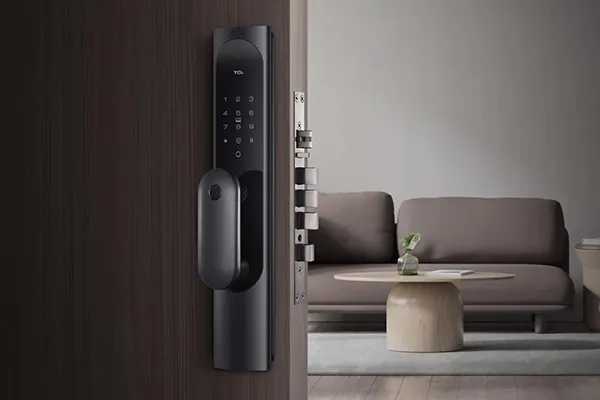
When deciding to upgrade your home door lock to a smart lock, the array of available unlocking methods can be overwhelming. The first questions many users have are: Which method is the safest? Which is the most convenient? Do I need all of them?
In reality, the multiple unlocking methods integrated into modern smart locks are not merely a haphazard collection of features. They form a sophisticated system designed to meet the diverse needs of different family members and various life scenarios. Understanding the principle, advantages, and optimal use case for each method is key to choosing a smart lock that truly fits your life. This article provides an in-depth analysis of the six mainstream unlocking methods, helping you find the perfect balance between security and convenience.
I. Fingerprint Recognition: Your Personalized, Efficient Pass
Technical Principle:Utilizes semiconductor live fingerprint recognition technology. It detects biometric features like ridges and valleys of a fingerprint and senses blood flow and capacitance changes beneath the skin to ensure it’s reading a live finger, effectively preventing spoofing by fake fingerprint films or photographs.
Core Advantages:
- Exceptional Convenience: Open the door with just a touch—no additional steps required. Ideal when your hands are full.
- Uniqueness: Each person’s fingerprint is unique, offering a high level of security.
- No Physical Object Required: No need to carry or remember any additional item.
Potential Considerations:
- Recognition rates might occasionally be affected for individuals with very faint (e.g., from long-term manual work), heavily worn, or unusually dry/wet fingerprints.
- Ensure fingerprints are registered accurately from multiple angles for best results.
Ideal Users & Scenarios:
- Daily Family Members: The primary, high-frequency unlocking method for adults and older children.
- Users Seeking Ultimate Efficiency: For those with frequent comings and goings who desire a “seamless” entry experience.
- Typical Scenario: Coming home from work or returning from grocery shopping.
II. Passcode/PIN Unlocking: The Flexible and Shareable Smart Choice
Technical Principle:Authentication is done by entering a preset numeric sequence on a touchpad. Advanced smart locks typically support a “false passcode” or “privacy code” feature, which allows you to input random numbers before and after the correct code; the lock recognizes it as long as the correct sequence is included consecutively.
Core Advantages:
- Excellent Flexibility: Passcodes can be easily created, modified, or deleted without re-registering biometric data.
- Secure Temporary Access: Allows the creation of one-time or scheduled passcodes that expire after use or at a set time.
- Discreet Access: The false passcode feature effectively prevents others from snooping and learning your real code.
Potential Considerations:
- It’s good practice to periodically change to a strong passcode (avoid birthdays, simple repeats) and manage permissions carefully.
- Elderly users unfamiliar with electronic devices might need a brief learning period.
Ideal Users & Scenarios:
- Households needing to grant temporary access: For cleaners, repair workers, or visiting friends.
- Rental property or vacation rental hosts: Can assign independent passcodes to different tenants/guests, which are voided after their stay.
- As a reliable backup: When fingerprint recognition is temporarily unavailable for any reason.
III. Key Card/RFID Tag Recognition: An Elegant Continuation of a Familiar Habit
Technical Principle:Authentication uses encrypted IC/NFC chips. Each card has a unique, non-replicable encrypted code. The lock’s reader identifies this code to grant access.
Core Advantages:
- Very Low Learning Curve: Functions exactly like a traditional access card, making it extremely user-friendly for seniors and children.
- Tangible Sense of Control: The physical card provides a stronger psychological sense of security and control for some users.
- Easy to Manage: Cards can be reported lost and disabled at any time. Management is straightforward and intuitive.
Potential Considerations:
- Cards can be lost or forgotten.
- They require proper care to avoid physical damage or demagnetization.
Ideal Users & Scenarios:
- Elderly family members and young children: For those who may struggle with fingerprints or passcodes, a card is the most intuitive option.
- Users accustomed to access cards: Provides a consistent “one-card” experience from the community gate to the home door.
- A convenient access method for guests: Issuing a dedicated card to infrequently visiting relatives.
IV. Mechanical Key: The Timeless Emergency Backup
Technical Principle:Based on traditional pin-tumbler or wafer-tumbler mechanical lock cylinder mechanisms. This serves as the physical backup unlocking method for the smart lock.
Core Advantages:
- Absolute Reliability: Completely independent of the electronic system. It is the ultimate failsafe in case of a completely dead battery, circuit failure, or other extreme electronic malfunction.
- Universal Understanding: Anyone knows how to use a key in an emergency.
Potential Considerations:
- Keys carry the traditional risks of being duplicated or lost.
- It is essential to store spare keys in a secure location outside the home (e.g., office, trusted family member’s house), not inside.
Ideal Users & Scenarios:
- A mandatory feature for all smart lock users: This is the “safety latch” for all unforeseen electronic issues.
- Extremely cautious users: Adds a final layer of defense for peace of mind.
V. Smartphone App Control: The Hub for Remote Management & Smart Integration
Technical Principle:Operates via a direct Bluetooth connection to the lock or remote connectivity via Wi-Fi/a gateway. Users control the lock through a dedicated brand app (e.g., Tuya Smart App or TT Lock App).
Core Advantages:
- Transcends Time and Distance: Allows remote generation of temporary passcodes and viewing of access logs from anywhere, anytime.
- Centralized, Granular Management: Manage all user permissions, check battery levels, and set unlocking alerts from within the app.
- Smart Home Hub: Enables integration with other smart home devices to create automated scenes like “unlock to turn on lights” or “lock to activate away mode.”
Potential Considerations:
- Relies on having your phone charged and, for remote features, a stable internet connection.
- Initial setup requires a learning curve.
Ideal Users & Scenarios:
- Working professionals and busy families: Who often need to grant remote access to couriers, housekeepers, etc.
- Smart home enthusiasts: To use the lock as a trigger for whole-home automation.
- Multi-property managers: To remotely monitor and manage the lock status of apartments or rental properties in different locations.
VI. 3D Facial Recognition: The New Hands-Free Access Experience
Technical Principle:Employs 3D structured light or Time-of-Flight (ToF) technology. Projects tens of thousands of invisible infrared dots onto the face to construct a highly precise 3D facial model, which is then compared to the pre-registered model.
Core Advantages:
- Truly Contactless: Completely hands-free, offering an excellent experience when carrying a child or groceries.
- High Security: The 3D model effectively defends against 2D attacks using photos, videos, or masks.
- Fast and Natural: Automatic recognition and unlocking as you approach the door, creating a smooth process.
Potential Considerations:
- Installation height should suit the average height range of the primary users in the household.
- Extreme lighting conditions (e.g., strong backlight) may temporarily affect recognition speed.
Ideal Users & Scenarios:
- Families with infants/toddlers: Parents can open the door without any action while holding their child.
- Users seeking futuristic tech: Who enjoy the cutting-edge experience of “a look is all it takes.”
- Frequent users often carrying items: Ideal for those who regularly return from shopping trips or often carry heavy loads.
How to Combine Them? A Scenario-Based Selection Guide
After understanding the characteristics of each method, you can flexibly combine them based on your family composition and lifestyle:
- Multi-Generational Household:3D Facial Recognition (primary for adults) + Key Cards (for elderly/children) + Fingerprint (backup) + App Control (for adult children to check status) + Mechanical Key (emergency).
- Young Couple/Family:Fingerprint Recognition (primary) + App Control (for remote access & smart scenes) + Passcode (for temporary guests) + Mechanical Key (emergency).
- Rental/Vacation Property:Passcode Unlocking (core, for easy distribution of temporary codes) + App Management (for remote oversight by owner/manager) + Mechanical Key (emergency backup).
Conclusion
The multiple unlocking methods of a smart lock essentially provide you with a rich spectrum of choices along the axis of “absolute security” and “ultimate convenience.” No single method is omnipotent, but a scientific combination can handle myriad situations. The ideal smart lock seamlessly integrates into your family’s habits, making security a silent guardian and convenience a natural part of daily life.
When making your choice, return to the essence of living: consider who will use it regularly, under what circumstances, and what your expectations are for a smarter lifestyle. Only then can technology truly serve people, turning every return home into a pleasant experience.